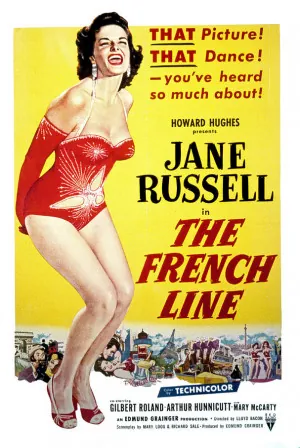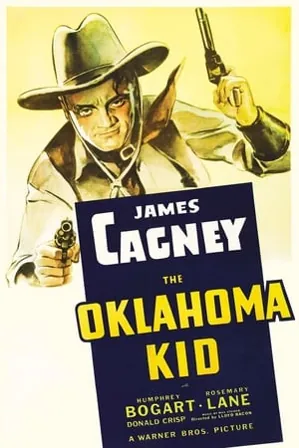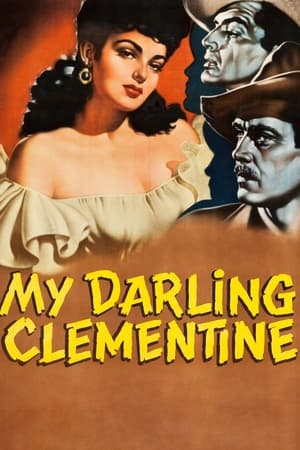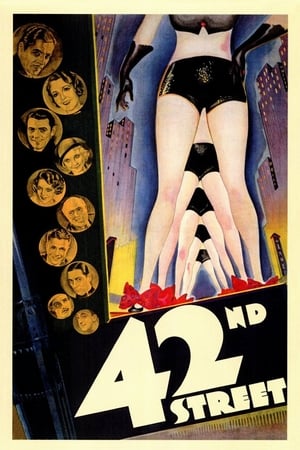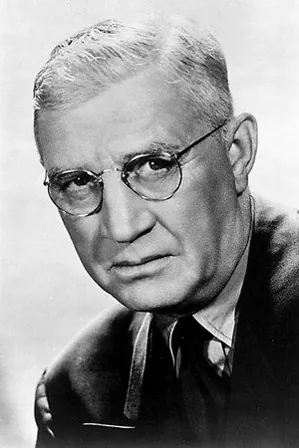
Lloyd Bacon, an American director born in 1889, made significant contributions to cinema across various genres. He helmed The Oklahoma Kid (1939), a classic Western that showcases his ability to blend action and drama, and Knute Rockne All American (1940), which captures the spirit of sportsmanship in a biographical narrative. Bacon's direction in The French Line (1954) further demonstrates his versatility, transitioning from earlier silent films to vibrant Technicolor productions. His work remains a vital part of the cult film conversation, especially within the realms of exploitation and genre cinema.
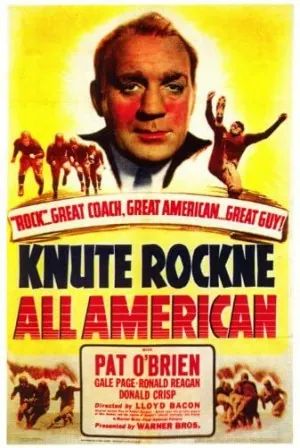
Knute Rockne All American
Lars Rockne and his family, including his four year old son Knute, emigrate to Chicago in 1892 from their native Norway. By his mid-twenties Knute saves enough to attend obscure Notre Dame University, where he excels in football and chemistry. He and a teammate develop the forward pass as an offensive weapon while working as life guards on summer break and use it to upset heavily favored Army in a historic game. After graduation Rockne becomes a teacher while coaching part-time but ultimately abandons academics to devote all his energies to football. During his tenure as head coach at the school, he develops such outstanding players as George Gipp, who dies prematurely from a strep infection, and the Four Horseman while introducing many innovative tactics including the backfield shift. Rockne, known for his staccato motivational speeches, devotes his life to maintaining the integrity of the sport he loves and promoting it as an integral component in the development of the American character.