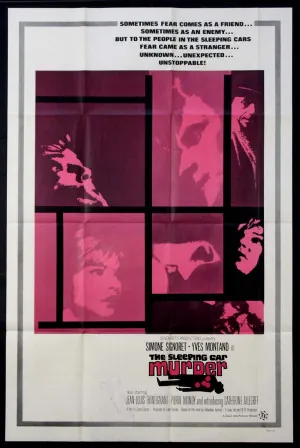
Born in 1933 in Loutra Iraias, Greece, Costa-Gavras emerged as a significant voice in political cinema, blending thriller elements with social commentary. He made his mark with The Sleeping Car Murder (1965), where he served as both director and writer, showcasing his knack for suspenseful storytelling. His later work, including Mr. Klein (1976), further solidified his reputation for tackling complex themes within the framework of gripping narratives, making him an essential figure in the landscape of cult and exploitation films.
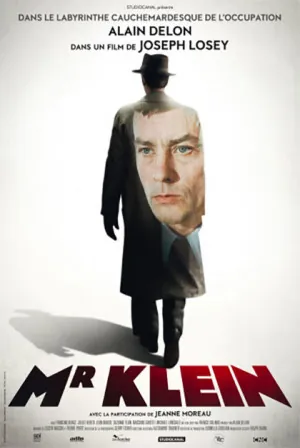
Mr. Klein
Paris, January 1942. France is occupied by the Nazis. Robert Klein, apparently apolitical, is a well-to-do art dealer, Roman Catholic and Alsatian by birth, who takes advantage of French Jews who need to sell artworks to raise cash to leave the country. One day, the local Jewish newspaper, addressed to him, is delivered to his home. He learns that another Robert Klein who has been living in Paris, a Jew sought by police, has had his own mail forwarded to him in an apparent attempt to destroy his social reputation and make him a target of official anti-Semitism. He reports this to the police, who remain suspicious he may be reporting this scheme to disguise his own true identity. His own investigations lead him in contradictory directions, to Klein who lives in a slum while having an affair with his concierge and to Klein who visits a palatial country estate where he has seduced an apparently Jewish married woman. When the art dealer cannot locate the other Klein, authorities require him to offer proof of his French non-Jewish ancestry. While waiting for the documentation to arrive, he struggles to track down his namesake and learn his motivation. Before he can resolve the situation by either means, he is caught up in the July 1942 roundup of Parisian Jews. He is reunited with Jews who once were his clients as they board boxcars for Auschwitz.