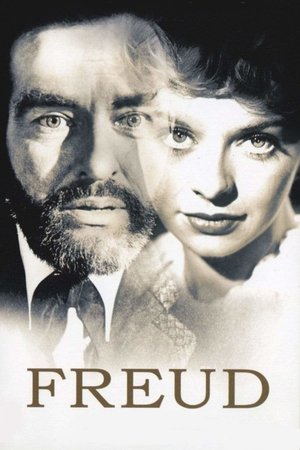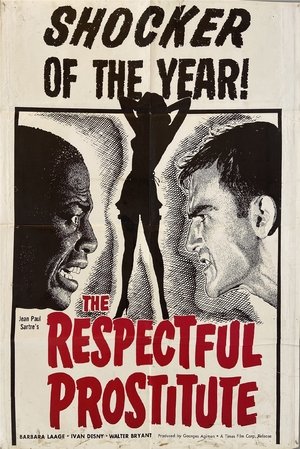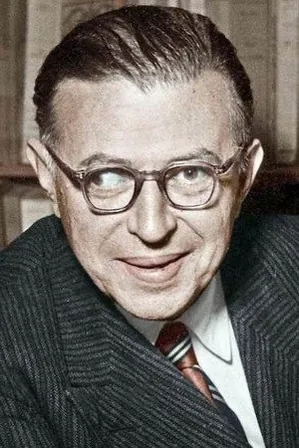
Jean-Paul Sartre, born in Paris in 1905, is best known as a philosopher and playwright whose literary prowess extends into cinema. In Freud: The Secret Passion (1962), he contributes as a writer, intertwining his existentialist themes with the exploration of psychoanalysis. Sartre's work often delves into the intricacies of human existence, making his involvement in this film significant for those interested in the intersection of philosophy and cinema. His unique perspective enriches the narrative, reflecting the tumultuous intellectual landscape of the 20th century.
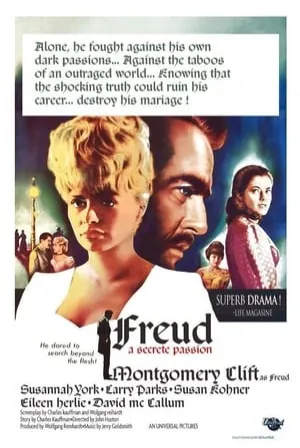
Freud: The Secret Passion
The story compresses the many years it took Sigmund Freud to evolve his psychoanalytic theories into what seems like a few months. Almost every neurotic symptom imaginable conveniently manifests itself in one (composite) patient, Cecily Koertner. She is sexually repressed, hysterical, and fixated on her father. And so Freud goes to work, developing one hypothesis after another. Also shown is Freud's home life with his wife Martha, whom he alternately discusses his theories with and patronizes when she reads one of his papers.