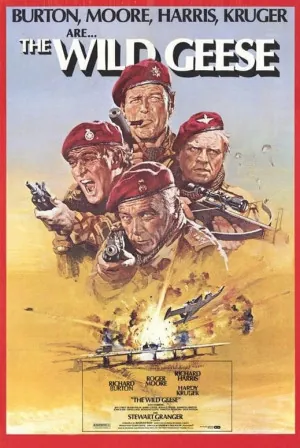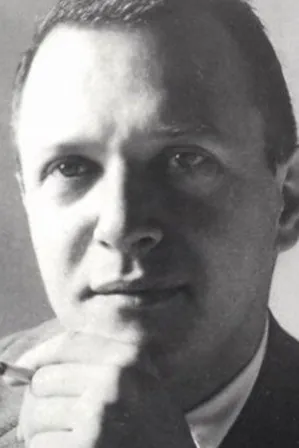
Reginald Rose, born in 1920 in Manhattan, was a pivotal writer whose work in The Wild Geese (1978) and Wild Geese II (1985) showcased his ability to weave complex narratives around themes of conflict and camaraderie. His experience in the U.S. Army during World War II informed his writing, bringing a sense of realism and depth to the characters he created. Rose's contributions to the genre of action and adventure films reflect his mastery in addressing social issues through compelling storytelling, making him a significant figure in the landscape of cult cinema.
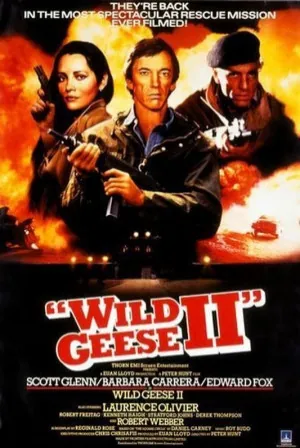
Wild Geese II
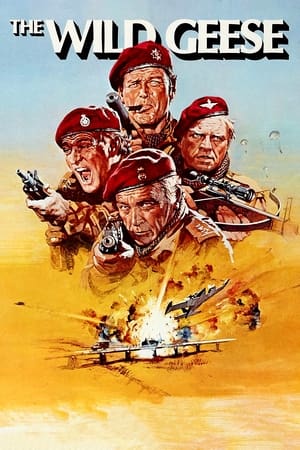
Africa, 1977 Veteran mercenary Allen Faulkner trains and then leads a group of 50 hired soldiers in an attempt to rescue deposed President Julius Limbani. After initially being successful the mission begins to fall apart, double-crossed and caught in the open, an enemy plane strafes Faulkner's men. With what few men remain Faulkner looks to escape the country in an old Dakota aeroplane. With only his best friend Rafer Janders is left to board the plane, Janders is shot in the leg and can't catch the taxiing plane. As the hordes of ferocious Simbas are virtually upon him, Janders calls for Faulkner to kill him, which he regretfully does.