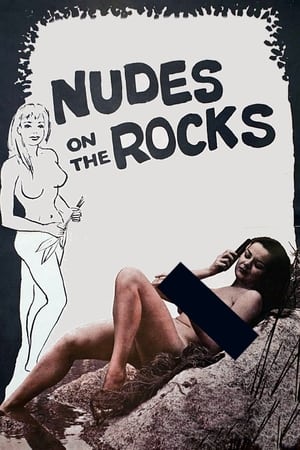
Warner Rose
Warner Rose, a director known for his bold vision, helmed the audacious film 50,000 B.C. (Before Clothing) in 1963. This provocative work delves into the absurdity of prehistoric life, blending satire with a daring narrative that challenges societal norms. Rose's approach to filmmaking captures the essence of exploitation cinema, making him a notable figure in the genre. His ability to push boundaries resonates with fans of cult films, ensuring that 50,000 B.C. (Before Clothing) remains a conversation starter in the realm of grindhouse cinema.
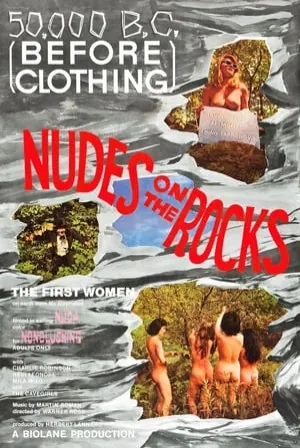
50,000 B.C. (Before Clothing)
Charlie Wishnick, an ex-burlesque comedian, receives a scolding from his prudish wife, an ex-stripper, for daring to enjoy himself at the Sewer Department Ball. He stumbles into his neighbor's time machine, which carries him back to 50,000 B. C. He is captured by a cave man, and sentenced to death by the King. The Queen intervenes to save him, but he is commanded not to touch the maiden Bubsmia, who has been promised as a sacrifice to the giant Gorax. Nevertheless, Bubsmia seduces Charlie. She is seized and sentenced to die, but charms the judge and jury, who condemn Charlie in her place. The trial recalls Charlie's vaudeville "courtroom scene." Zelda, a beautiful slave, is given the task of making Charlie's last night a happy one. Their evening together is continually interrupted, just as in Charlie's "honeymoon" vaudeville routine. As Charlie is taken to be smashed against the rocks, Gorax appears. Charlie whistles "Dixie." The hat he had rented for the Sewer Department Ball once belonged to Lincoln, and explodes at the tune. The stunned giant vanishes, and Charlie reluctantly becomes the new leader. Zelda discovers the time machine, however, and accidentally starts it. Attempting to pull her away, Charlie is caught inside. Upon his return to the modern age, he is confronted by his wife, who wants to know where he has been. Charlie struggles to restart the motor, and finally succeeds, traveling off to paradise again.