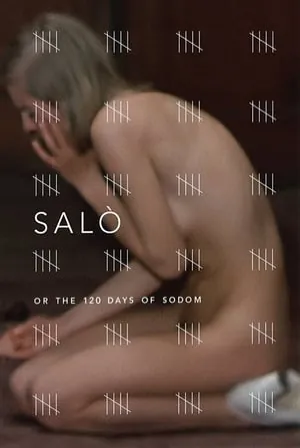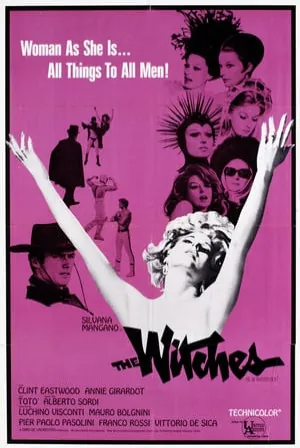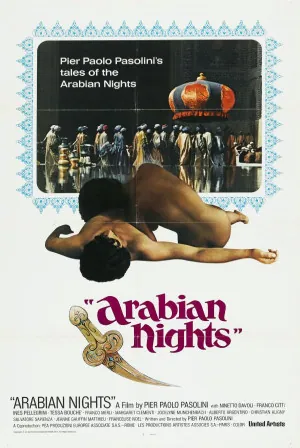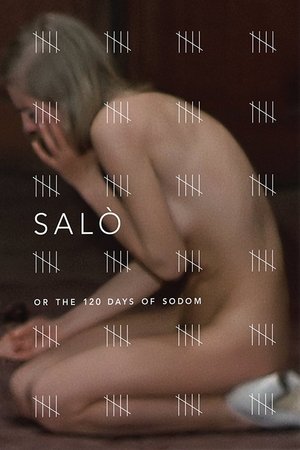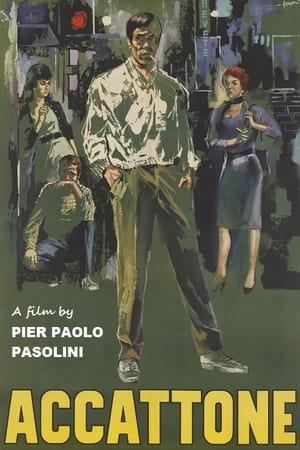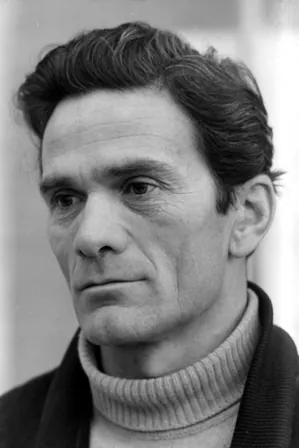
Pier Paolo Pasolini, born in 1922, was a multifaceted Italian director and writer whose work challenged societal norms. He directed The Witches (1967), a provocative anthology film that showcases his unique vision, and Salò, or the 120 Days of Sodom (1975), a controversial adaptation of the Marquis de Sade that critiques power and morality. His other notable works include Pigsty (1969) and Arabian Nights (1974), both of which reflect his radical approach to storytelling and politics. Pasolini's films continue to inspire discussions around art and ethics in cinema.
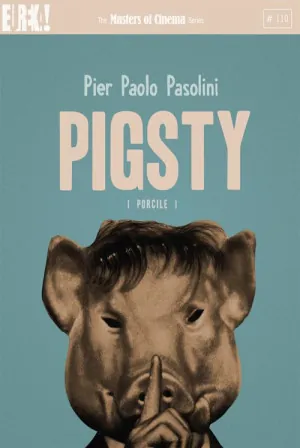
Pigsty
The film features two parallel stories. The first one is set in an unknown past time and is about a young man (Clémenti) who wanders in a volcanic landscape (shot around Etna) and turns into a cannibal. The man joins forces with a thug (Citti) and ravages the countryside. At the end, he and his gang get arrested and at his execution, he recites the famous tagline of the film: "I killed my father, I ate human flesh and I quiver with joy." The story is about the human capacity of destruction and a rebellion against the social prerequisites implied against it. The second story is about Herr Klotz (Lionelli), a German industrialist and his young son Julian (Léaud) who live in 1960s Germany. Julian, instead of passing time with his radically politicised fiancée Ida (Wiazemsky), prefers to build relationships with pigs. Herr Klotz, on the other hand, with his loyal aide Hans Guenther (Ferreri), tries to solve his rivalry with fellow industrialist Herdhitze (Tognazzi). The two industrialists join forces while Julian gets eaten by pigs in the sty. Herdhitze intends to conceal the event. The story attempts to provide a link between the Third Reich and Wirtschaftswunder Germany.