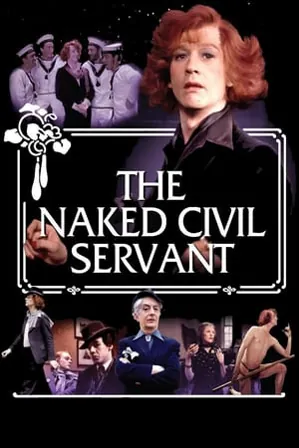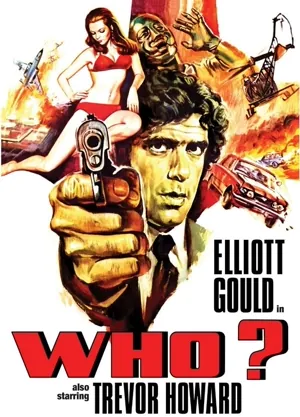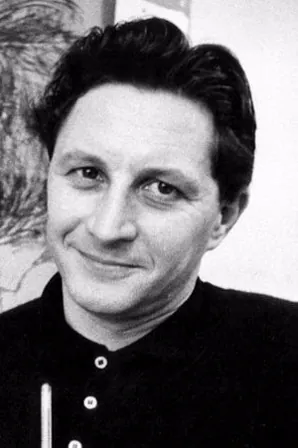
Jack Gold, born in 1930, was a British director who made significant contributions to the realm of cult cinema. He directed The Naked Civil Servant (1975), a groundbreaking adaptation that explored themes of identity and sexuality, and Man Friday (1975), which offered a unique take on the Robinson Crusoe story. Gold's work is characterized by a realist approach that resonates within the British film tradition, making his films essential viewing for fans of thought-provoking cinema. His direction in Who? (1974) further solidified his role in shaping narratives that challenge societal norms.
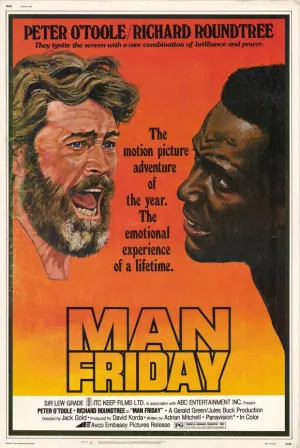
Man Friday
Friday and four of his friends arrive in a canoe on the island on which Crusoe has been stranded for years. When they start to consume a deceased comrade in a reverent form of ritual cannibalism, Crusoe kills Friday's friends and takes the latter to his camp as a prisoner. Friday is very quick to learn the English language. Crusoe then tries to teach him Western concepts like property, sports, punishment, fear of God and so on, but Friday's reaction is only one of bewilderment and amusement. He begins to question and mock these concepts that seem senseless and destructive to him. One day he rebels, refusing to be a slave anymore. After some conflict, Crusoe has to admit that he could not live in solitude anymore, so he concedes in regarding Friday as a human being, although not as an equal. To do so, he starts to pay Friday one gold coin per day for his labour—an ambivalent sign of respect, as there is no use for money on the remote island. When an English ship appears, Crusoe is overjoyed. Two men arrive in a boat and are invited for dinner but it turns out that they are slave traders who want to capture both Crusoe and Friday. So the latter collaborate in killing the intruders when their violent motives are revealed, and the ship sails away, leaving the protagonists stranded as before. For a while, a kind of friendship develops between Crusoe and Friday. Friday thinks that he maybe can teach Crusoe his more relaxed way of living, and not to be controlled by "thoughts of power, guilt and fear", which are very strong traits in Crusoe's personality. One day, Crusoe falls back into his old delusions of being a superior being. He had been trying to teach Friday in a mock-up school for a while, ridiculously complete with a chalkboard. We see that the topic of the day, written on the chalkboard, is "civilization". Obviously, for Crusoe this is a culmination point, where his concepts are ultimately confronted with those of Friday. He gets in a frenzy and binds Friday to a pole, then holds a frightful, lunatic sermon about the superiority of his ways while threatening Friday with his gun. In the end, he shoots, but not at Friday, but at his own talking parrot, which had been his sole companion before Friday's arrival. After that shocking experience, Friday gives up his attempts to change Crusoe; the friendship also ends, leaving only the relationship of Crusoe as master and Friday as a paid servant. After several years, Friday has accumulated 2,000 gold coins, the price that Crusoe once mockingly called for the hut and all his belongings. Friday now turns Crusoe's western ways against him. Catching him by surprise, he throws the gold on a table, declaring himself the owner of the material property; swiftly, he takes control of baffled Crusoe's gun, and coldly declares that the master-servant-relationship is inverted now. He forces Crusoe to build a solid raft, and both men put to sea for Friday's home island. When they have arrived there, Friday tells the story of their relationship to the gathered tribe, which reacts with astonishment and amusement about the strange ways of Crusoe. When the latter requests to join the tribe, proposing that he could teach the children, Friday strongly speaks against him, saying that "the only thing he (Crusoe) teaches is fear." So Crusoe is rejected and returns to his solitary island, where he commits suicide.