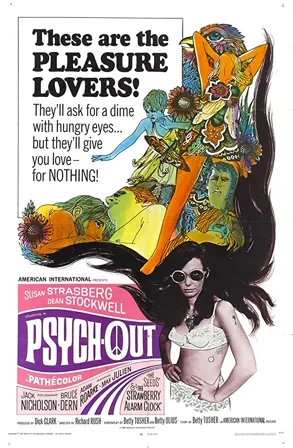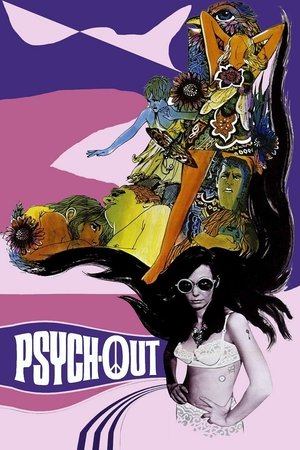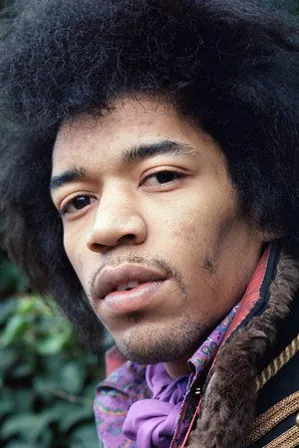
Jimi Hendrix, born in 1942, made a notable foray into film with his roles in Psych-Out (1968) and Rainbow Bridge (1972). In Psych-Out, he embodies a free-spirited musician navigating the psychedelic landscape of the late 1960s, perfectly aligning with the era's counterculture. His performance in Rainbow Bridge further cements his connection to the vibrant world of rock and roll cinema, where music and visual artistry converge. Hendrix's brief yet impactful cinematic presence invites a deeper exploration of the intersection between music and film during a transformative period in American culture.
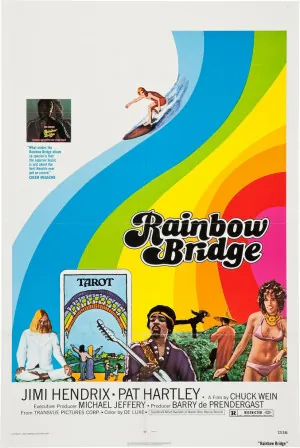
Rainbow Bridge
The loosely documentary-style film is centered on the experiences of a New York model, who travels from San Diego, California, to an occult center on the island of Maui, Hawaii.[6] While there, "she encounters various devotees of surfing, clairvoyance, zen, yoga, meditation, Tai-Chi and the odd ufoloist".[6] As it unfolds, a free concert by Jimi Hendrix is staged in a former pasture in the upcountry region (2,000 feet above sea level) near Olinda, southeast of the center of the town of Makawao, on the northwest, upcountry slope of Haleakalā. A few hundred island hippies, surfers, and local residents show up to witness the event.[9] Hendrix performed with the post–Jimi Hendrix Experience "Cry of Love" tour group, drummer Mitch Mitchell and bassist Billy Cox. A group of Hare Krishnas chanted "Om" for a few minutes and Wein introduced the group.[9] Although Hendrix played two full sets (approximately 50 minutes each), due to technical problems, only about 17 minutes of film footage was deemed usable.