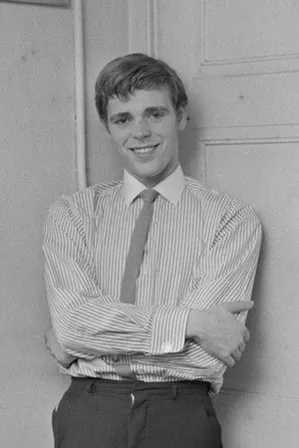
Christopher Gable, born in London in 1940, made a significant transition from ballet to acting after leaving the Royal Ballet in 1967 due to health issues. In The Rainbow (1989), he brings a nuanced performance that reflects his rich background in dance and theater. Gable's career spanned various genres, but his role in this film highlights his ability to convey deep emotional resonance. His work in The Rainbow contributes to the film's exploration of identity and desire, making it a notable entry in the realm of cult cinema.
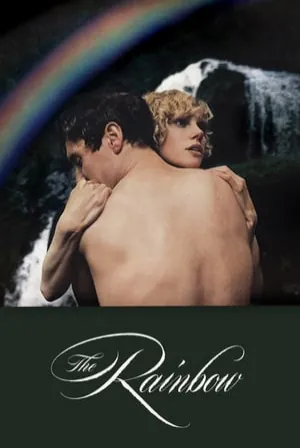
The Rainbow
A headstrong young woman in turn-of-the-century England searches for intellectual, emotional, and sexual freedom while resisting the narrow future prescribed by family, romance, and convention. Ken Russell's rather loose adaptation of the last part of D.H. Lawrence's "The Rainbow" sees impulsive young Ursula coming of age in pastoral England around the time of the Boer War. At school, she is introduced to lovemaking by a bisexual physical education instructress. While experiencing disillusionment in her first career attempt (teaching), she has an affair with a young Army officer, who wants to marry her. Unable to accept a future of domesticity, she breaks with him, and eventually leaves home in search of her destiny. Born to a rich landowner in the waning days of the Victorian era, Ursula Brangwen grows into a beautiful young woman full of imagination and ambition. The free-spirited Ursula begins to feel trapped by her prim surroundings, but her life changes when she has an erotic experience with Winifred, a bisexual teacher. From then on, Ursula puts all of her passion and creativity into the pursuit of sexual fulfillment. But her insatiable quest becomes a source of anguish.