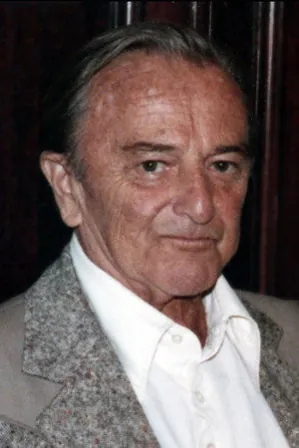
George Sherman, born in 1908, began his career in the film industry after arriving in California as a bellboy. He transitioned from the mail room at Warner Brothers to directing, eventually helming Panic Button (1964), a film that reflects his knack for style over substance. Known for his work in B-westerns and low-budget fare, Sherman brought a distinct flair to the exploitation genre, merging action with a unique visual rhythm. His contributions to cult cinema continue to resonate, particularly through his work in Panic Button, which highlights his ability to craft engaging narratives within constrained budgets.
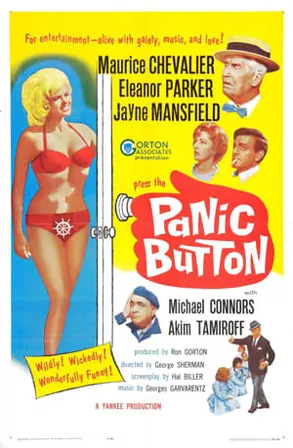
Panic Button
Faced with the ruinous prospect of having to pay income tax on $500,000, business executive Frank Pagano decides to invest the money in a project that he believes is doomed to financial ruin: a television pilot film based on the story of Romeo and Juliet. Pagano hires Pandowski, an eccentric disciple of Stanislavski, to direct the film and casts Philippe Fontaine, a faded French actor long forgotten in Hollywood, as Romeo. For the role of Juliet, Pagano hires Angela, a starlet with a voluptuous body but no talent. When the film is finished, Philippe and his ex-wife Louise steal a print and, disguised as nuns, take it to the Venice Film Festival. The film is mistaken for a satire by the festival jury and is awarded the Golden Lion for the best comedy. Fontaine swallows his wounded pride and accepts his new reputation as a comedian. Pagano arrives on the scene and, making the best of the situation, decides to become a film producer.