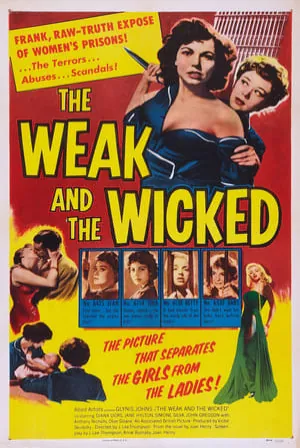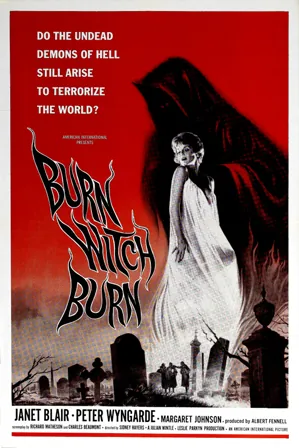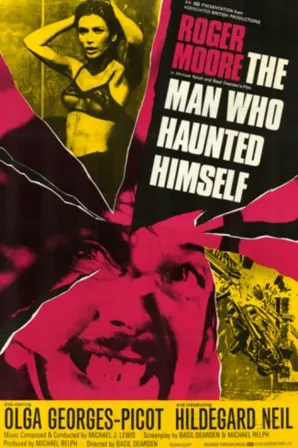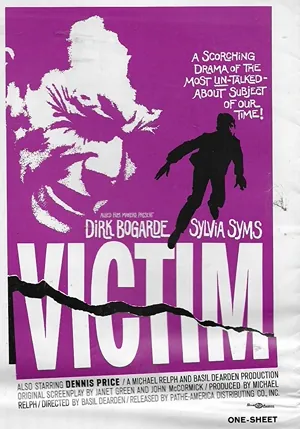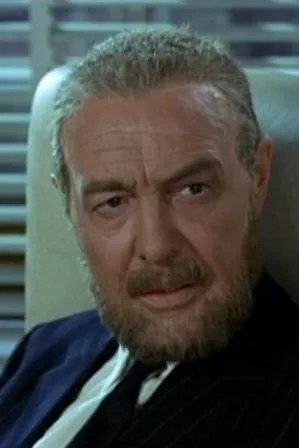
Anthony Nicholls, born in 1902, was an English actor whose career spanned several decades, leaving a mark in cult cinema. He appeared in Victim (1961), where he brought depth to the narrative of societal pressures and personal struggles. In The Man Who Haunted Himself (1970), Nicholls further showcased his ability to navigate complex characters, contributing to the film's exploration of identity and duality. His roles in The Weak and the Wicked (1954) and Night of the Eagle (1962) solidified his presence in the genre, making him a notable figure in the realm of British cult films.
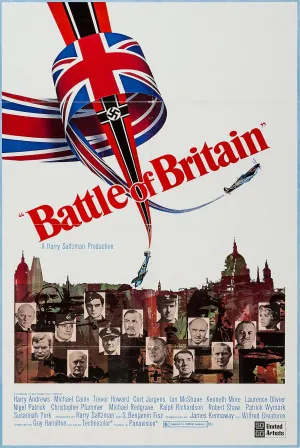
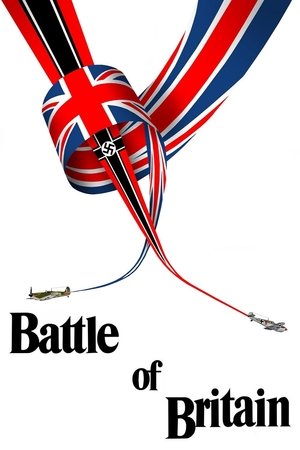
Battle of Britain
During the Battle of France in June 1940, RAF pilots evacuate a small airfield in advance of the German Blitzkrieg. The pilots, along with British and French military, leave just as German aircraft arrive and execute a heavy strafing attack. RAF Air Chief Marshal Hugh Dowding (Laurence Olivier), realising that an imminent invasion of Great Britain will require every available aircraft and airman to counter it, stops additional aircraft being deployed to France so that they are available to defend Britain. In the next dramatic scene, French civilians watch in grim despair as a convoy of German troops marches into France and takes control. At the deserted beaches of Dunkirk, the BBC reports British Prime Minister Winston Churchill's declaration that "what General Weygand called the 'Battle of France' is over, the Battle of Britain is about to begin". Luftwaffe Inspector-General Field Marshal Milch arrives to inspect a large German airfield in captured France. Hundreds of Heinkel He 111 bomber aircraft are stationed under Luftwaffe General Kesselring's command. Luftwaffe commanders are stunned when the Führer informs them that the British are not their "natural enemy" and delays their attack while attempting a diplomatic settlement. In neutral Switzerland, the German ambassador, Baron von Richter (Curd Jürgens) officially proposes new peace terms to his British counterpart, Sir David Kelly (Ralph Richardson), stating that continuing to fight the "masters" of Europe is hopeless. Kelly's brave retort, "Don't threaten or dictate to us until you're marching up Whitehall ... and even then we won't listen", is followed by a private comment to his wife that von Richter is probably correct. In England, commanders celebrate their good fortune, using the delay to build up their strength and continually train their pilots and ground controllers. The wait finally ends when Luftwaffe pilots receive orders to move to the front, where troops are preparing for a sea-borne invasion. The campaign begins with the Luftwaffe launching an early morning assault on "Eagle Day". The plan is to destroy the RAF on the ground before they have time to launch their Spitfire and Hurricane fighters. Eagle Day proves highly successful, with attacks on British radar installations by Stuka dive bombers. Two radar stations are put out of action and a number of British airfields are damaged or destroyed but British losses are relatively light. A grueling battle of attrition ensues, with the RAF airfields under repeated attack while inflicting heavy, but non-critical, damage on the attacking forces. Adding to the RAF's problems is a battle between the commanding officers of 11 Group, Keith Park (Trevor Howard), and 12 Group, Trafford Leigh-Mallory (Patrick Wymark). 12 Group is tasked with protecting 11 Group's airfields while 11 Group meets the enemy, but in raid after raid 12 Group aircraft are nowhere to be seen. Called to meet Dowding, Leigh-Mallory explains that the "Big Wing" tactic takes time for form up, while Park complains that the tactic simply is not working. Dowding ends the debate noting a critical shortage of pilots, wearily remarking, "We're fighting for survival, and losing." The turning point occurs when a squadron of German bombers becomes lost in bad weather at night and drops bombs on London. In retaliation, the RAF attacks Berlin. Though the damage is negligible, an enraged Adolf Hitler publicly orders London to be razed. Hermann Göring (Hein Riess) arrives in France to personally command the attack, confident that the end of the battle nears. Their first attack skirts the RAF, who are still defending their airfields to the south, and they bomb unopposed. Night time attacks follow and London burns. One of the film's most poignant scenes takes place during the Blitz. Non-commissioned fighter pilot Andy Moore (Ian McShane) comes home on leave and is furious to discover that his family have returned to London from their place of evacuation. Meeting them in a church during a raid, he gives his children presents of model aeroplanes, and tells his wife she must return them to the country at once. As they argue, an ARP warden arrives with news of a family trapped in a burning house. Andy goes to help but when he returns, the church has been reduced to a flaming ruin, leaving his wife and children dead. Meanwhile, to supplement Commonwealth forces, the RAF has been forming units of foreign pilots who have escaped German-occupied countries; the main difficulty is their lack of English-language skills. While on a training flight, a Free Polish Air Force squadron accidentally runs into an unescorted flight of German bombers. Ignoring the commands of their British training officer, they peel off one by one and shoot down several of the bombers with unorthodox aggressive tactics. Park rewards them by elevating them to operational status, leading Dowding to do the same for the Canadian and Czech squadrons as well. While discussing the day's events, Park and Dowding examine the German switch to London. Given a respite, Park notes that he will be able to repair his airfields and bring his squadrons back to full strength. Dowding adds that 12 Group units north of London are now all within range, while enemy fighters are at the extreme edge of their own range. He concludes that "turning on London could be the German's biggest blunder." The next German daytime raid is met by a massive response; watching his formations build up in 11 Group's operations room, Wing Commander Willoughby (Robert Flemyng) wryly states "this should give them something to think about." RAF fighters arranged into large groups, attack en masse, overwhelming the German raids. Luftwaffe losses are now critical and Göring is incensed, ordering his fighters remain with the bombers, an order the pilots hate because it robs them of the mobility required to keep the British squadrons off the German bombers. Losses continue to mount on both sides. The climactic air battle of 15 September 1940 arrives, with Winston Churchill in attendance at 11 Group's operations room. In the underground bunker, British ground control personnel order every squadron into the air to meet the massive attack. Intense combat in the sky over London follows, with both sides taking heavy losses. The outcome is so confused that Dowding refuses to comment on the events. The next day the RAF anxiously await a raid that never comes. Likewise the Luftwaffe is disheartened by heavy losses and also await orders that never come to resume raiding. Two German anti-aircraft gunners, who had earlier observed a French port teeming with Kriegsmarine vessels and landing barges, now observe a deserted harbour basin. Göring leaves the front, accusing his commanders of betrayal. Dowding looks out over the gardens and up to the sky where the words of Winston Churchill appear onscreen: "Never in the field of human conflict was so much owed by so many to so few."